

Therapy for mums
Because you need someone who gets it

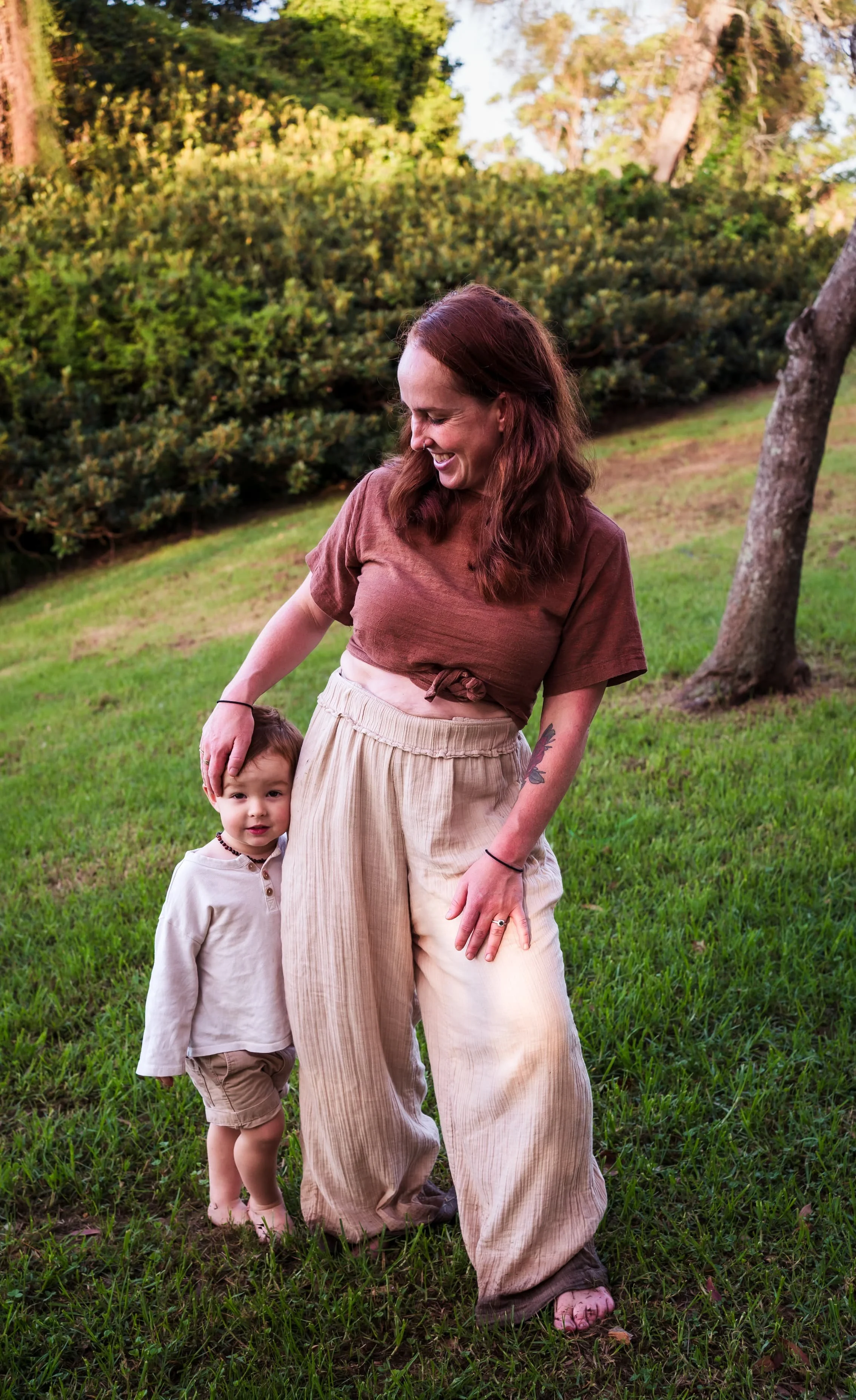

Like you, I’ve known the raw edges of motherhood, the moments where everything shifts and you no longer recognise yourself.
My first birth ended in an emergency caesarean. It wasn’t how I’d planned my entry into motherhood, or my baby’s entry into the world, and it left me with a deep grief, a lot of questions, and a tangle of feelings.
Motherhood has a way of breaking us open, but in that breaking, we often discover a strength we didn’t know we had.
By the time I welcomed my second baby, things felt profoundly different, not just because of the care and support I’d invited in, but because something had shifted within me. I was learning to trust myself, to soften, and to know I was enough as a woman and a mother.
Motherhood cracked me open in ways I could never have prepared for. But it also planted a seed, a desire to create the kind of space and support I know is deeply needed
A space where every mother feels held, seen, and supported as she finds her way, and remembers she was never meant to do this alone.

What therapy can look like
This isn’t one specific person, but a combined example of experiences many mothers share when they come to therapy.
She reached out about eight months after having her baby.
She said she felt anxious most days. Her mind didn’t stop. If the baby slept longer than usual, she worried. If the baby didn’t sleep, she worried. She checked things twice. Sometimes three times.
She was tired but found it hard to rest. When she sat down, she thought about what she’d forgotten or what she should be doing instead.
She snapped at her partner more than she used to. Then she felt bad about it. She replayed what she’d said and wished she’d handled it differently.
Small decisions felt bigger than they should have. She googled things late at night. She compared herself to other mothers and usually came up short.
She missed the version of herself who didn’t second-guess everything. She wasn’t sure where that part of her had gone.
Why she reached out

The work we did together
In our sessions, we didn’t try to get rid of the anxiety.
Instead, we slowed down enough to listen to it.
We began noticing the different parts of her that were showing up:
The anxious part that scanned for danger.
The perfectionist part that believed if she did everything “right,” nothing would go wrong.
The critical part that stepped in quickly when she felt she’d fallen short.
The overwhelmed part that just wanted everything to stop for a moment.
Rather than pushing them away, we became curious.
What were they protecting?
What were they afraid would happen if they softened?
As she started to feel safer in the room — and in her own body — something shifted.
She began to notice her nervous system more clearly. The tightness in her chest. The shallow breath. The heat of irritation before it spilled out. Instead of overriding it, she practised staying with it.
Not forcing calm.
But allowing feeling.
Over time, emotions that had been held tightly began to move. Tears came. Anger surfaced. Grief for her old identity. Pressure she hadn’t realised she was carrying about what a “good mother” should be.

What changed
Her anxiety didn’t vanish.
But it stopped running the show.
She started catching herself mid-spiral.
Her self-talk grew kinder.
She could identify triggers instead of being blindsided by them.
She asked her partner for support more directly.
She rested occasionally — without quite so much guilt.
The anxious voice was still there at times.
But it wasn’t always in the driver’s seat.
There was more space between feeling and reaction.
More choice.
And perhaps most importantly, she no longer believed that her struggle meant something was wrong with her
She began to see that she was a woman in the messy middle of a transition — figuring out who she is now in this new role and how she wants to show up for herself and her family. She is in the middle of her becoming
A Note on This Story
This is a composite case study, created from common themes and patterns in my practice. It does not describe any one individual.
Therapy is deeply personal. Experiences, pace, and outcomes vary, and results are not guaranteed. This example is shared to illustrate what the therapeutic process can look like, not to promise specific outcomes.

Still have questions?